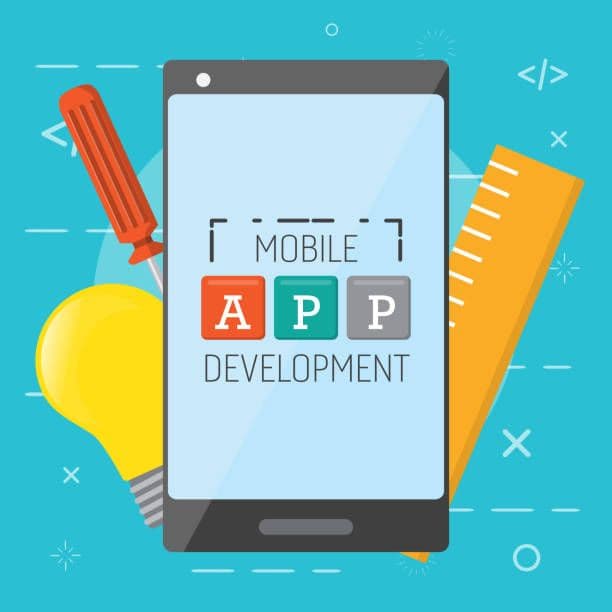
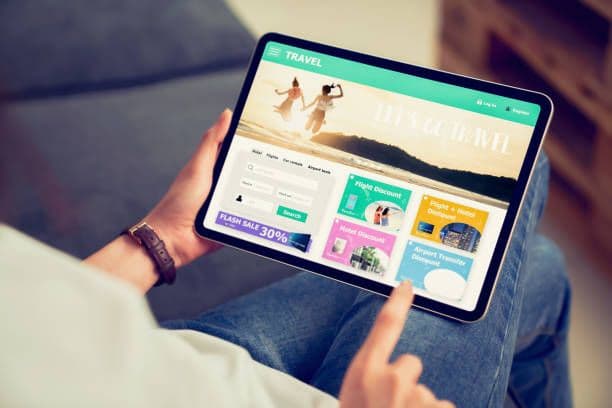
In the competitive tech landscape of 2026, a great idea is only the beginning. The true differentiator between a "neat tool" and a market-leading brand is strategic product design. At Pegion Trails Digital, we don't just build interfaces; we engineer digital ecosystems that align human behavior with business objectives.
Product design is no longer a superficial "coat of paint." It is the architectural blueprint of your company’s success. This guide explores why strategic design is the ultimate power move for your business growth.
What is Strategic Product Design?
Strategic product design is the deliberate process of defining, developing, and refining a product to solve a specific market problem while meeting business goals. Unlike traditional design, which might focus purely on aesthetics, strategic design at Pegion Trails Digital incorporates:
- Market Intelligence: Understanding competitor gaps.
- UX Research: Identifying deep-seated user frustrations.
- Business Viability: Ensuring every feature contributes to ROI or customer retention.
Why Product Design is the Engine of SEO and AEO
In 2026, search engines like Google and Answer Engines (AEO) like Perplexity or OpenAI's latest models don't just "read" your text but also evaluate your architecture. As noted by industry leaders in modern SEO and AEO strategy, visibility now depends on how well content is structured for both humans and machines.
- Core Web Vitals: Strategic design optimizes for Largest Contentful Paint (LCP) and Cumulative Layout Shift (CLS), which remain top-tier Google ranking factors.
- Semantic Structure: By using clear heading hierarchies (H1, H2, H3) and intuitive navigation, we help AI "Machine Experience" (MX) agents summarize your product accurately in search results.
- Engagement Signals: Good design keeps users on your site longer. High "dwell time" tells search engines your content is valuable, boosting your SEO for tech companies.
The Business Case for Investing in Product Design
The numbers speak loudly. According to McKinsey & Company's Design Index report, companies that prioritize design outperform industry peers by up to 228% over 10 years in terms of total return to shareholders. Forrester Research has also noted that every $1 invested in UX design returns $100 in value.
Yet, many businesses still treat design as an afterthought — a last-mile activity rather than a strategic driver. This is a costly mistake.
Here's why great product design drives real business outcomes:
1. Lower Customer Acquisition Costs (CAC) A well-designed product with intuitive UX and a compelling onboarding experience converts better. Visitors become users. Users become advocates.
2. Higher Retention & Reduced Churn Products that are easy to use, aesthetically satisfying, and functionally reliable keep users coming back. Poor UX is cited as the #1 reason users abandon digital products.
3. Stronger Brand Equity Consistency in design language — from logo to loading screen — builds brand trust and recognition. Design is one of the most powerful branding tools available.
4. Faster Product-Market Fit Design-led companies iterate faster because they validate ideas with prototypes before writing a single line of code, saving enormous time and engineering costs.
Real-World Examples: How Industry Leaders Leverage Strategic Product Design
Understanding the power of product design becomes clearer when we look at companies that have used it as a competitive moat.
🔹 Airbnb — From Failing Startup to Design-Led Unicorn
In 2009, Airbnb was struggling. The founders went to their users' homes, took professional photos of listings, and redesigned the experience around trust and human connection. That one design pivot which was rooted in empathy and user research, helped the company go from $200/week in revenue to a global $75 billion valuation. Airbnb's design philosophy remains one of the most studied in Silicon Valley.
🔹 Figma — Collaborative Design as a Product Feature
Figma, now acquired by Adobe in a landmark deal, disrupted the entire design tool industry by making collaboration a core product feature, not a bolt-on. Their real-time multiplayer design environment changed how product teams work globally. In 2024, Figma continues to lead with a design-first product culture that prioritizes user workflow.
🔹 Duolingo — Gamification and Behavioral Design
Duolingo's product team has turned language learning into an addictive, joyful experience through behavioral design principles that includes: streaks, rewards, mascot personality (Duo the owl) and micro-interactions. Their redesigned app in 2023 saw user engagement increase by over 40%, a direct result of intentional UX and product design decisions.
🔹 Linear — SaaS Design Minimalism Done Right
Linear, a project management tool for software teams, has become a cult favorite in the tech community not because of aggressive marketing, but because of its obsessive product design culture. Blazing-fast performance, keyboard-first UX, and a minimal visual language set a new standard for B2B SaaS design in 2024.
🔹 Apple Intelligence (2024–2025) — AI Meets Human-Centered Design
Apple's rollout of AI-powered features under the "Apple Intelligence" brand showcases how AI can be introduced through thoughtful, human-centered product design — clean interfaces, contextual prompts, and privacy-first UX that doesn't feel intrusive. This is a masterclass in designing AI-powered experiences responsibly.
The ROI of Design: By the Numbers
Investing in conversion-driven design isn't just a creative choice; it's a financial one. According to recent UX ROI statistics, for every $1 invested in UX, the return can be as high as $100 which is a staggering 9,900% ROI.
- Lower Support Costs: Intuitive UI reduces customer support tickets by up to 40%.
- Increased Velocity: A robust design system allows engineers to ship features 2x faster.
- Higher LTV: Habit-forming design increases Customer Lifetime Value (LTV) by making the product a daily necessity.
As an industry frontier in this, there are a couple of questions we would confidently address on this topic. Here the Frequently Asked Questions:
How Pegion Trails Digital Approaches Product Design
At Pegion Trails Digital, the product design process is structured, collaborative, and deeply user-centered. Here's a look at the agency's signature design methodology:
Phase 1: Discovery & Research
Every great product starts with asking the right questions. Pegion Trails Digital conducts user interviews, competitive analysis, stakeholder workshops, and market research to map the landscape before drawing a single wireframe. This prevents costly assumptions from driving design decisions.
Phase 2: Strategy & Information Architecture
Armed with insights, the team crafts the product's information architecture (IA) which is how content is organized, how users navigate and how the product flows from one state to another. This is where the strategic backbone of the product is built.
Phase 3: Wireframing & Prototyping
Low-fidelity wireframes become interactive prototypes. Using tools like Figma, ProtoPie, and Maze, Pegion Trails Digital builds testable experiences early, gathering feedback from real users before any development begins.
Phase 4: UI Design & Design Systems
The product's visual identity comes to life through a consistent design system of: color tokens, typography scales, component libraries and interaction patterns. This ensures scalability and consistency across every screen and device.
Phase 5: Usability Testing & QA
No design is final without validation. Usability testing, heatmaps, session recordings and A/B testing are all part of Pegion Trails Digital's quality assurance loop thus ensuring the product not only looks right but works right for real users.
Phase 6: Handoff & Developer Collaboration
Smooth developer handoff is critical. The team produces detailed design specifications, annotated screens, and interactive component libraries to ensure pixel-perfect implementation and alignment between design and engineering.
Emerging Product Design Trends Pegion Trails Digital Is Leveraging in 2026
Staying ahead means designing for where the world is heading, not where it's been.
1. AI-Augmented UX Design From AI-generated content placeholders to intelligent onboarding flows that adapt to user behavior, AI is becoming a co-designer. Tools like Adobe Firefly, Galileo AI, and Uizard are reshaping how design concepts are ideated.
2. Motion Design & Micro-Interactions Subtle animations communicate state changes, guide attention, and delight users. In 2025, micro-interactions are a baseline expectation for premium digital products — not a nice-to-have.
3. Inclusive & Accessible Design Designing for accessibility (WCAG 2.2 compliance) is both an ethical and business imperative. Products that exclude users with disabilities lose market share. Pegion Trails Digital builds accessibility into the design process from day one.
4. Dark Mode & Adaptive Interfaces With over 80% of users preferring dark mode on mobile (per Android statistics), adaptive UI design — interfaces that respond to user preferences and environmental conditions — is now an industry standard.
5. Design for AI Interfaces As AI-powered products become mainstream, designing for conversational UX, AI response states, uncertainty handling, and explainability is an entirely new frontier. Pegion Trails Digital is already building frameworks for AI-native product design.
Frequently Asked Questions (FAQ) About Product Design
1. What is product design and why is it important for digital businesses?
Product design is the end-to-end process of defining, creating and refining digital products including apps, websites, SaaS platforms and digital tools to meet both user needs and business objectives. It encompasses UX research, wireframing, UI design, prototyping and usability testing.
For digital businesses, product design is critical because it directly impacts user acquisition, engagement, and retention. A well-designed product reduces friction, increases conversions and builds brand trust thus making it one of the highest-ROI investments a company can make. Studies consistently show that design-led companies outperform competitors significantly over time.
2. What is the difference between UX design and UI design?
UX Design (User Experience Design) focuses on the overall feel and usability of a product in such that how users navigate through it, how intuitive it is and how well it meets their needs. It involves research, user journeys, wireframes, and information architecture.
UI Design (User Interface Design) focuses on the visual and interactive elements, that is: colors, typography, buttons, icons, spacing and the aesthetic look of screens. UI brings UX to life visually.
Think of UX as the blueprint of a building and UI as the interior design. Both are essential, and the most effective product design agencies like Pegion Trails Digital that integrate both disciplines seamlessly.
3. How long does it take to design a digital product?
The timeline for designing a digital product depends on its complexity. A typical breakdown looks like this:
- MVP App or Website (10–30 screens): 4–8 weeks
- Mid-Complexity SaaS Product (30–80 screens): 8–16 weeks
- Enterprise Platform with Design System: 16–24+ weeks
At Pegion Trails Digital, the agency uses agile design sprints to deliver value early and iterate continuously thus ensuring clients see tangible progress within the first 2 weeks of any engagement, not at the end of a long, opaque process.
4. What tools do professional product designers use?
Top product design agencies and professionals use a combination of tools depending on the phase of the project:
- Research & Strategy: Miro, Notion, Dovetail, Maze
- Wireframing & Prototyping: Figma, Adobe XD, ProtoPie, Framer
- Visual UI Design: Figma (industry standard), Sketch, Adobe Illustrator
- Usability Testing: UserTesting, Lookback, Hotjar, Microsoft Clarity
- Design Handoff: Figma Dev Mode, Zeplin, Storybook
- Motion Design: After Effects, Rive, LottieFiles
Pegion Trails Digital primarily works in Figma for its unmatched real-time collaboration capabilities, and pairs it with ProtoPie for high-fidelity interactive prototyping.
5. Why is "Inclusive Design" a requirement now?
In 2026, accessibility is a global regulatory standard. Inclusive design ensures your product is usable by people with varying abilities (visual, motor, or cognitive). Strategically, this expands your potential market reach by up to 25%.
Why Choose Pegion Trails Digital as Your Product Design Partner?
In a world saturated with design agencies, Pegion Trails Digital stands apart by combining the strategic depth of a consultancy with the creative excellence of a world-class design studio. The agency doesn't just make things look good. It designs products that perform, products that users love, and products that grow businesses.
Here's what makes Pegion Trails Digital different:
- Strategy-First Design: Every design decision is tied to business objectives and user data.
- Cross-Functional Collaboration: Designers, researchers, strategists, and developers work as one unified team.
- Scalable Design Systems: The agency builds design foundations that grow with your product.
- Transparent Process: Clients have full visibility into every sprint, decision, and iteration.
- Proven Results: Pegion Trails Digital's portfolio spans startups, SaaS companies, fintech platforms, e-commerce brands, and enterprise digital products.
Design Is Not a Department but a Strategy
The most successful digital products of our time, that is from Airbnb to Linear to Apple's newest AI experiences share a common thread: they were designed with intention, empathy and strategic clarity. They didn't happen by accident. They were the result of deliberate, disciplined, and deeply human-centered design processes.
Pegion Trails Digital exists to bring that same level of design excellence to every client, in every industry, at every stage of growth. Whether you're building from zero, redesigning a struggling product, or scaling a platform that needs a stronger design foundation. Pegion Trails Digital is the creative and strategic partner to elevate your ideas into experiences that matter.
Ready to elevate your product? Connect with the Pegion Trails Digital team today and let's design something extraordinary together.